Mold Inspection and Testing for Your Home
Request an inspection estimate
A mold inspection answers three plain questions. Is there mold? How much? And where is the moisture coming from? Providers in our network walk through your home, check damp areas, and take samples when testing makes sense.
Surfacesales Mold Help is a referral service. We do not inspect or test anything ourselves. We listen to your situation and connect you with an independent local provider who does the work and sets the price. If you are searching for mold inspection near me, this page explains what to expect, what testing involves, and what to ask before you book. Homes across the Akron area deal with damp springs, humid summers, and basements that stay wet, so you are not alone.
Think you have mold? Start here
A musty smell, a dark patch on a wall, or a damp corner in the basement can all point to mold. You do not have to guess. An inspection tells you what is there, where it is, and why it showed up.
Deal with the moisture first
If water is still getting in, that comes before anything else. Mold grows where damp stays. Shut off a leaking supply line, run a dehumidifier, and move belongings off wet floors. A provider can find the source, but the source has to be fixed or the mold comes back.
Signs that call for a prompt visit
- Visible growth larger than a few square feet
- A musty smell that returns after cleaning
- Wet drywall or carpet after a storm or spring flood
- Water stains on a ceiling after hail or heavy rain
- Coughing, sneezing, or itchy eyes that ease when you leave the house
Health questions and who answers them
Mold can bother people with asthma, allergies, or weaker immune systems. A doctor speaks to symptoms. An inspection speaks to the house. If someone at home feels unwell, do both.
When an inspection makes sense
Buying or selling a home is a common reason. So is a flooded basement, a roof leak, or a smell with no visible cause. Frame houses many decades old, bungalows, and ranch homes with full basements often hide damp in walls and crawl spaces. Humid summers and spring thaw make it worse. It also helps to look before you finish a basement.
Color alone will not name the mold
Dark growth is not always the kind people fear, and pale growth can still be a problem. Testing sorts it out. That is why residential mold removal usually starts with a proper look first.
What happens during a mold inspection
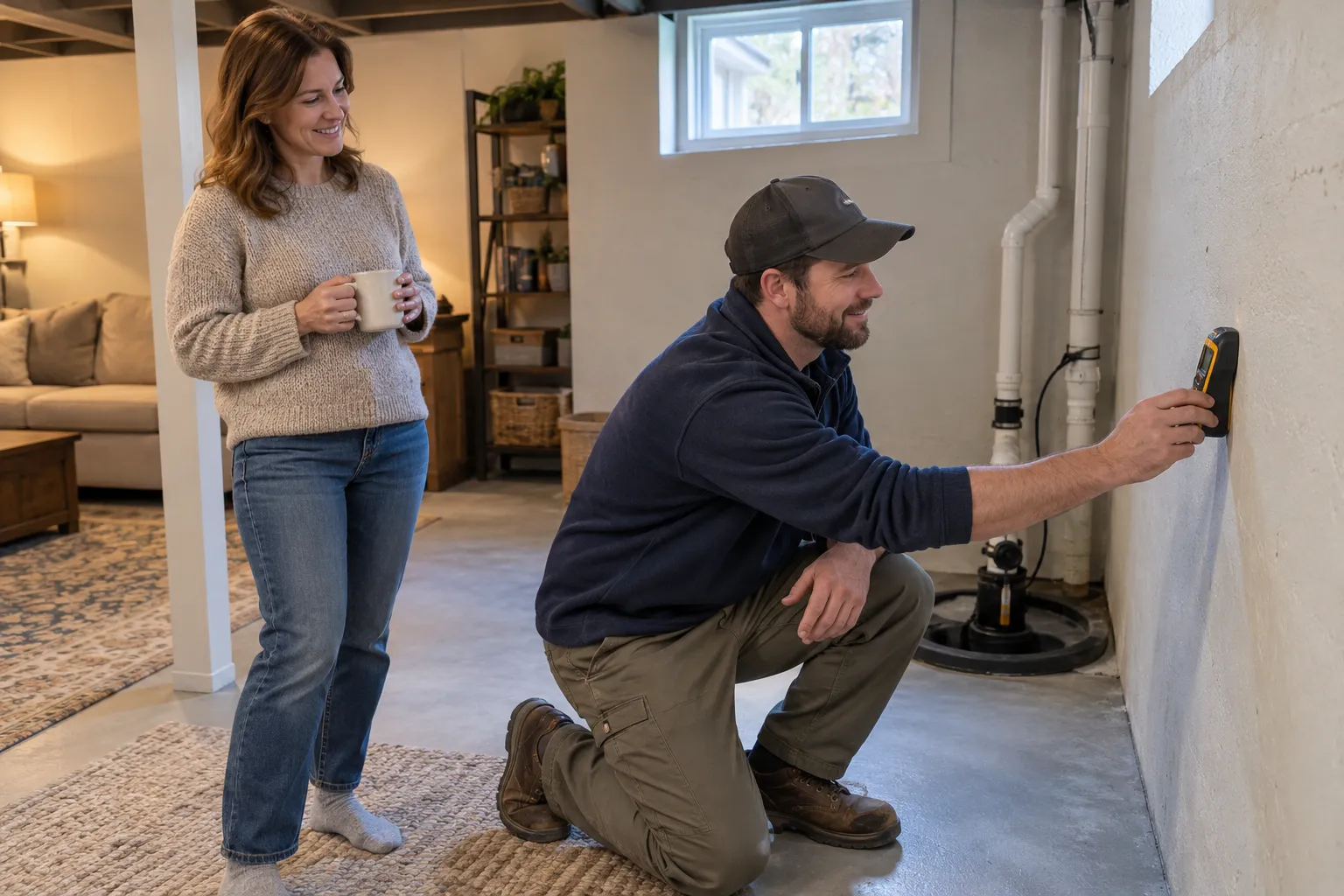
The provider starts by asking about your home's history. Past leaks, flooding, and sump pump trouble all matter. Then they check the basement, attic, windows, and plumbing areas. Many use a moisture meter, and some bring a thermal camera. Expect photos and notes. A typical visit takes a couple of hours, though bigger homes take longer.
Types of mold testing
Not every inspection needs a lab. When it does, these are the common options:
- Air samples: compare indoor air with outdoor air.
- Surface samples: a swab or tape lift from visible growth.
- Bulk samples: a small piece of material, such as drywall.
- Moisture mapping: not a lab test, but it shows where the damp hides.
Samples go to a lab. Ask about certified mold testing, meaning the tester has training and the lab is accredited.
Understanding your results
The report lists mold types and counts, usually next to outdoor readings. Some mold indoors is normal. The worry is higher indoor levels, or types that signal water damage. Ask the provider to explain the report in plain words and tell you what to do next.
Inspection and remediation: separate or together?
Some homeowners hire one provider to inspect and a different one to clean up. That gives a second set of eyes. Others like the convenience of one provider for both. Either can work. Just ask whether the provider does both, and get the scope of any cleanup in writing. Black mold remediation is its own service with its own steps.
Plan around your week
An inspection is usually low-disruption. Ask how long the visit takes, whether you need to be home, and whether anyone has to leave the house. Many providers can work around school runs and work shifts.
How to prepare
- Clear a path to the basement, attic, and utility areas
- Move stored boxes away from walls
- Write down where and when you noticed the problem
- Skip scrubbing the area first, since cleaning can stir up spores
- Gather photos or records of past leaks
- Keep pets in a safe room
Ask who answers
Surfacesales Mold Help is a referral service. When you reach out, we listen to the problem and connect you with an independent provider. Providers do the work. The provider sets the price and the schedule. Use the request form, or Request a callback to check provider availability.
Questions to ask the provider
- What training or certifications do you hold for mold testing?
- Which lab will you use, and is it accredited?
- What will the written report include?
- Do you also remove mold? If so, how do you keep the two jobs separate?
- What does your written quote cover?
After the report
Keep a copy for your records and for any future sale. Some policies may cover sudden damage, so check your policy. Providers can often help document damage for a claim.
What's Included
Visual Check
The provider looks over basement, attic, and plumbing areas for stains, damp spots, and growth.
Moisture Readings
A meter finds hidden damp behind walls and floors, where mold often starts.
Lab Sampling When Needed
Air or surface samples go to a lab to name the mold type.
Written Report
You receive plain findings and suggested next steps, so you can decide what to do.
What mold testing typically costs in the U.S.
Prices vary by home size, number of samples, and how hard the damp is to find. These are typical U.S. ranges only. Ask any provider for a written quote before work begins.
| Service | Typical range | Notes |
|---|---|---|
| Visual inspection only | $200 – $600 | Smaller homes, no lab work |
| Full home inspection with moisture readings | $300 – $900 | Larger homes cost more |
| Air sample (each) | $50 – $200 | Usually paired with an outdoor sample |
| Surface or bulk sample (each) | $40 – $150 | Lab fees may be included or extra |
| Thermal camera scan | $100 – $400 | Helps trace hidden moisture |
| Written lab report and review | $100 – $300 | Ask what the report covers |
How It Works
Tell Us What You See
Describe the smell, stains, or water issue through the request form or by phone.
Get Matched
We connect you with an independent local provider in our network.
Book a Visit Time
Agree on a time that fits your schedule and confirm the quote in writing.
Review the Findings Together
The provider explains the results and what next steps, if any, make sense.
Why Call Surfacesales Mold Help
Clear Roles
Surfacesales Mold Help only makes the connection. Independent providers inspect, test, and set their own prices.
Local Matching
We route you to providers who know local damp basements and humid summers.
Estimate First
Start with a request form. Phone is a backup if you prefer it.
Busy-Home Friendly
Ask providers to plan around your week so the visit fits real family life.
Other Services
Need mold inspection and testing in Akron?
Tell us about the mold problem and request an estimate. We will route you to an independent local provider in our network.
No obligationMold Inspection and Testing FAQ
How do I know if I need a mold inspection?
Look for a musty smell, water stains, peeling paint, or damp spots that keep returning. If you had a leak, flood, or roof damage, an inspection is a sensible next step. It confirms what is there and where the moisture comes from.
Can I just buy a mold test kit at the store?
Kits can show that spores exist, but spores are in every home. They rarely tell you how much or where. A provider reads the whole house and explains the results.
Does a mold inspection mean I will need remediation?
Not always. Some inspections find only minor moisture issues that a repair solves. If mold is found, the report shows how big the problem is. Then you can decide what to do and compare written quotes.
Reach a local provider
Tell us about the mold problem and request an estimate. We will route you to an independent local provider in our network.
No obligation